Back to projects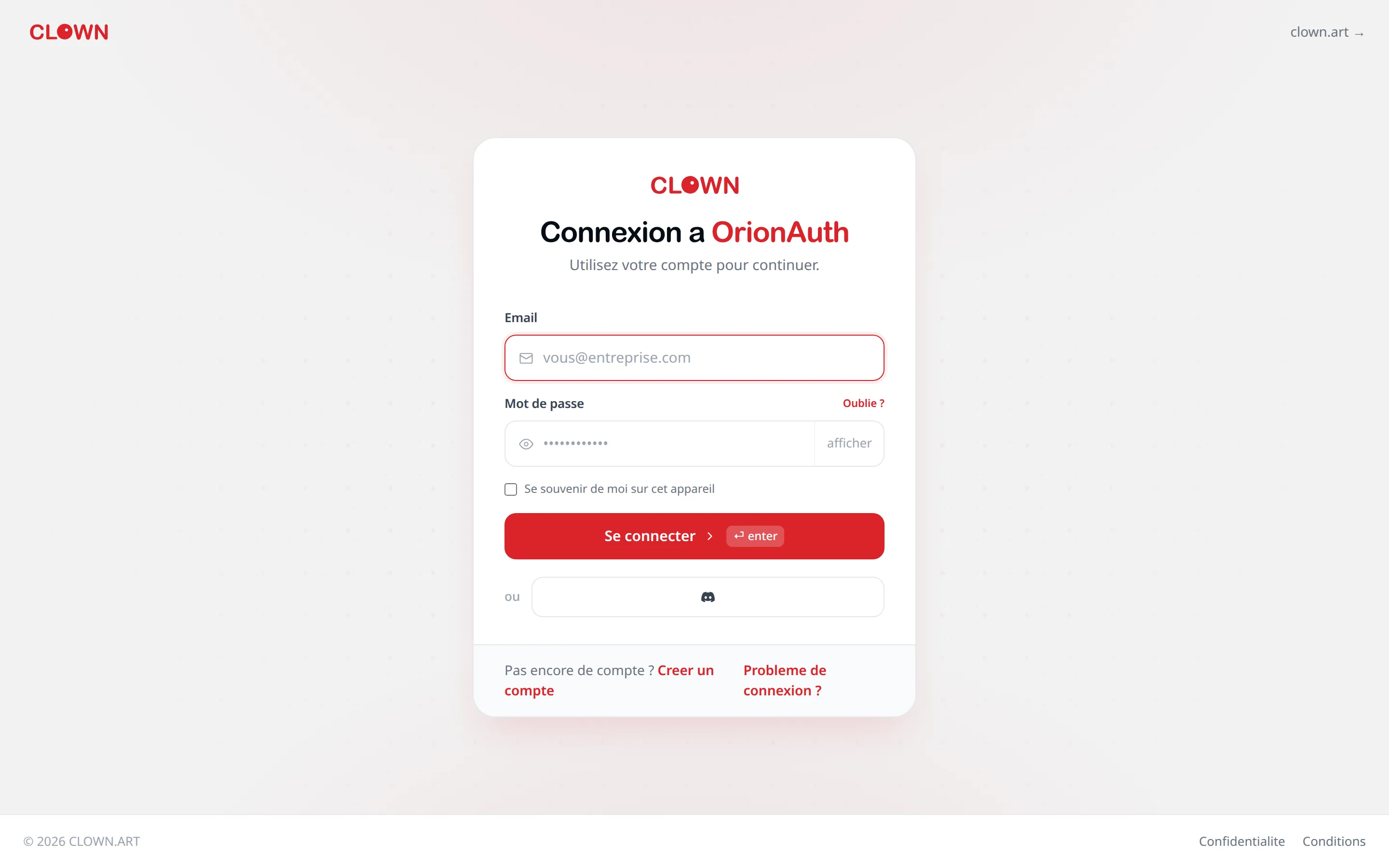
In Clown School colours 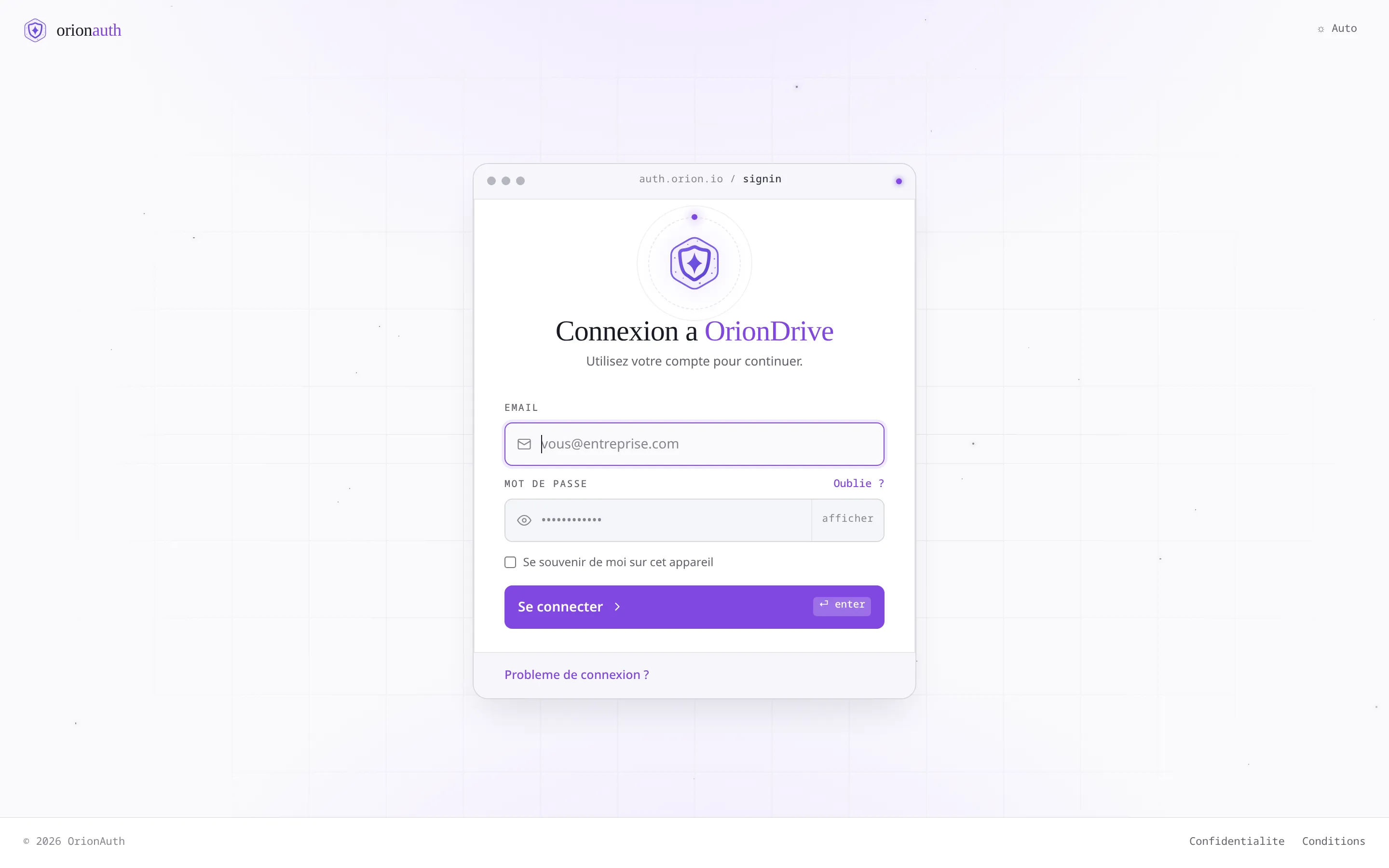
In OrionDrive colours
OrionAuth
Clown School depended on an external sign-in service. I chose to write my own, for my clients and for my own tools.
- For
- Clown School and my own tools
- Period
- 2026
- My role
- Design and development
My choices
Follow the standards to the letter
OAuth 2.1 and OpenID Connect: any standard application plugs in, with no custom code.
An invisible migration
Old passwords are accepted, then strengthened at the next sign-in.
Attack my own system
Two security audit passes, to find the holes before an attacker does.
Today. In production for Clown School, with a sign-in screen in each product’s colours.
For developers
- Commits
- 698
- Lines
- 68,000
- Stack
- Go, PostgreSQL, OIDC, WebAuthn, OPA / Rego, Prometheus, Vue 3
My first encounter with OAuth was the Microsoft sign-in of my Minecraft launcher. A year later, I wrote my own identity provider to replace Logto, with two SDKs (TypeScript and Go).